What Is Concrete Line Pumping?
When most people think about a concrete project, they picture a concrete truck backing up to the job site and pouring concrete directly where it’s needed. While that works well for many projects, it isn’t always possible.
On many residential and commercial jobs throughout Metro Atlanta, limited access, elevation changes, landscaping, or existing structures make direct truck access difficult. That’s where concrete line pumping becomes an effective solution.
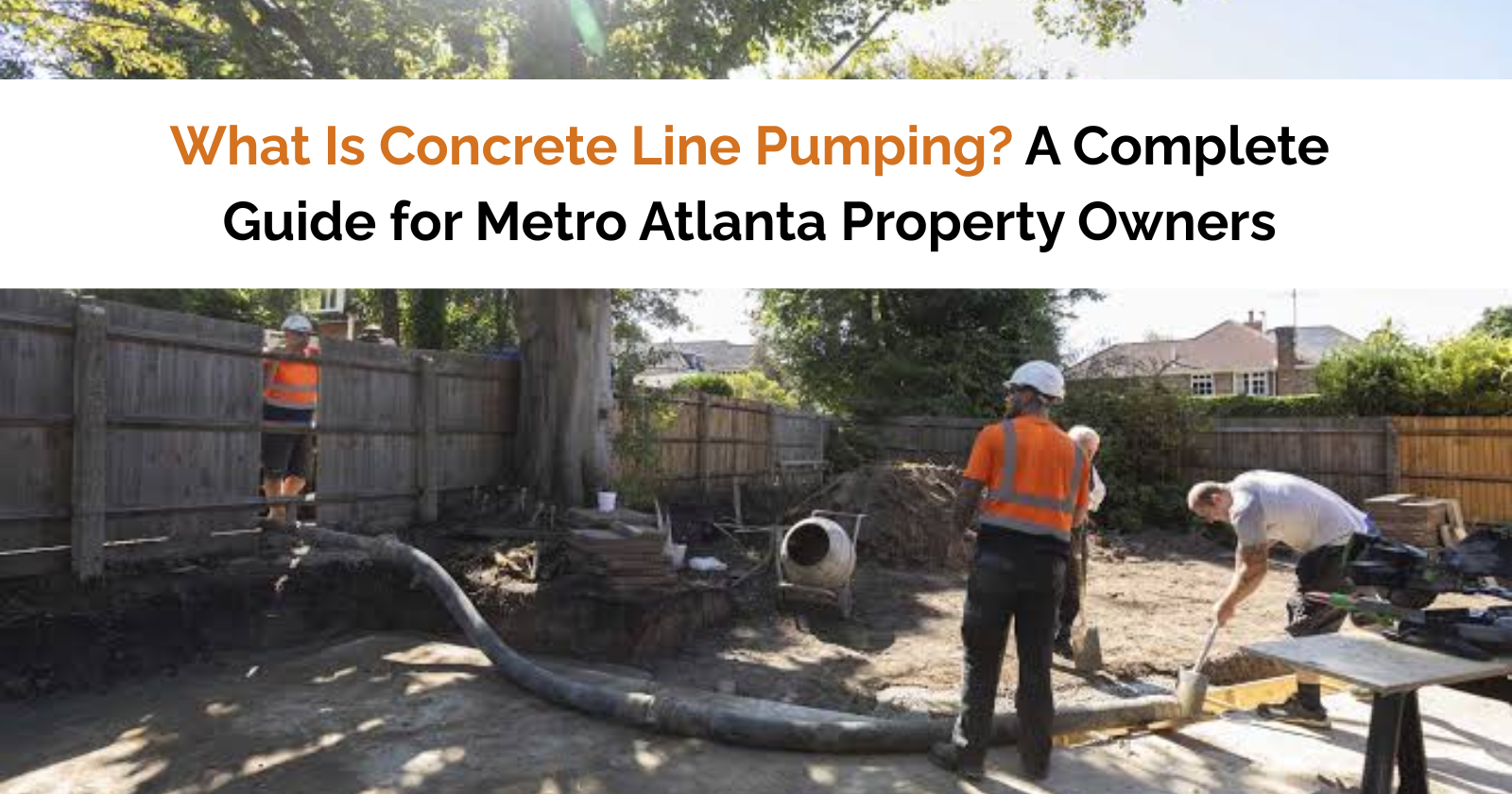
Concrete line pumping uses a specialized pump and flexible hoses to transport concrete from the ready-mix truck directly to the placement area. This allows crews to place concrete accurately, even in locations that would otherwise be difficult to reach.
How Does Concrete Line Pumping Work?
Concrete is transferred from the ready-mix truck into a line pump. From there, it travels through connected hoses directly to the pour location.
Depending on the project, hoses can be routed around structures, through side yards, behind homes, or across larger commercial sites, allowing concrete to be placed efficiently while reducing unnecessary handling.
When Is Concrete Line Pumping Used?
Line pumping is commonly used for:
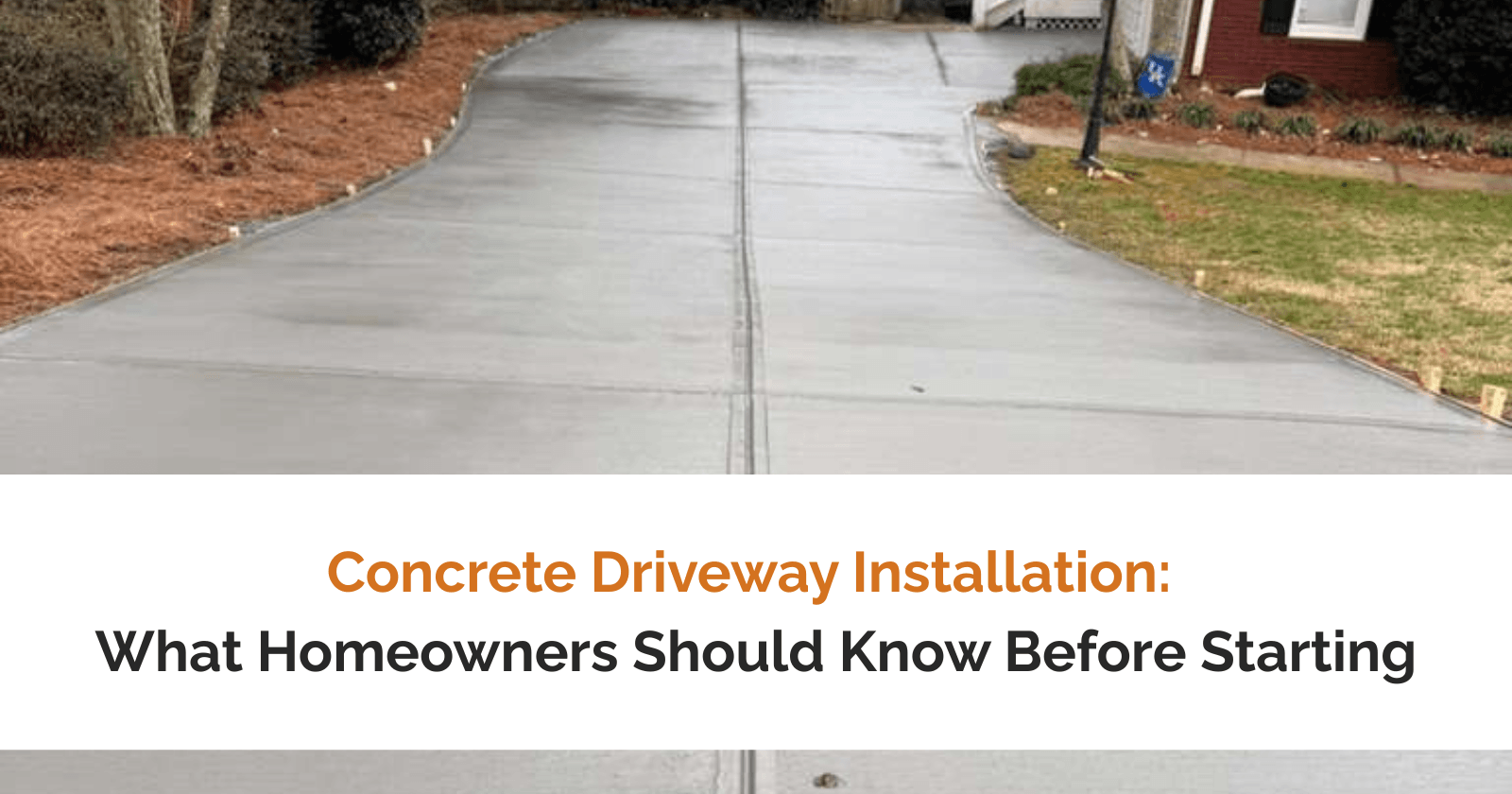
- Driveways with restricted access
- Backyard concrete projects
- Multi-phase commercial developments
Every project is different, and the appropriate placement method depends on the site’s layout and accessibility.
Benefits of Concrete Line Pumping
Better Access
Projects with limited access can often be completed without trying to maneuver heavy equipment into confined spaces.
Improved Placement
Concrete can be delivered more precisely to the intended location, helping crews maintain a smoother workflow during installation.
Increased Efficiency
Reducing the amount of manual movement of concrete can help improve productivity and keep projects moving on schedule.
Suitable for Residential and Commercial Projects
Line pumping is not just for large commercial developments. It’s also widely used on residential construction projects throughout Metro Atlanta.
Common Projects That Benefit From Line Pumping
- Retaining wall construction
- Commercial concrete slabs
- School and municipal projects
Frequently Asked Questions
Q. Does every concrete project require line pumping?
No. Some projects allow direct truck access, while others benefit from line pumping because of access limitations or site conditions.
Q. Is line pumping only used for commercial construction?
No. Many residential projects also use line pumping, especially when the pour location cannot be reached directly by a concrete truck.
Q. Can line pumping help reduce project delays?
Selecting the appropriate placement method before the project begins can help improve efficiency and reduce disruptions on pour day.
Conclusion
Concrete line pumping provides a practical solution for projects where direct truck access isn’t possible or efficient. Whether you’re planning a residential foundation, driveway, sidewalk, retaining wall, or commercial slab in Metro Atlanta, understanding your placement options can help ensure a smoother construction process.